Two lasers, two complementary roles
Several wavelengths are used at the practice, each for what it does best:
- The Erbium laser (Er,Cr:YSGG) has an ablative action: it precisely cuts or vaporises both soft tissue and bone, with minimal heating. In particular, it makes it possible to pass through the gum to place an implant without an incision, or to clean a socket after an extraction.
- The Diode laser provides in-depth decontamination and disinfection of the surgical site, without altering the structure of the tissues.
In short, the first laser is ablative, while the second decontaminates. Used together, they allow more precise surgery that preserves more tissue.
Applications
Implant dentistry
Implant placement without a flap or stitches, and above all decontamination of the socket when an extraction is followed by an immediate implant: vaporising the infected or inflamed tissue lining the socket is a key step in healing, which no other instrument can achieve as completely. See the implant on the day of extraction.
Periodontology
Disinfection of periodontal pockets and minimally invasive gum surgery, alongside root cleaning. See periodontitis.
Photobiomodulation
At low power, laser light stimulates cells and tissue healing (LLLT, low-level laser therapy). It is used to support healing after a procedure.
What the laser means for the patient
- fewer incisions and stitches;
- reduced bleeding during the procedure;
- generally a more comfortable recovery;
- more thorough decontamination of infected sites.
Long-standing expertise
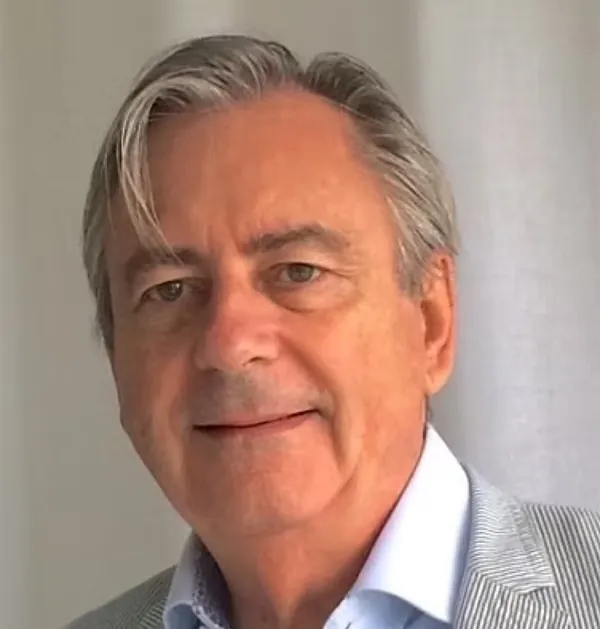
Dr Gilles P. Chaumanet holds the European University Diploma in Medical Lasers (Paris V) and the University Diploma in Lasers and Medicine (Bordeaux II). Founder of the International Institute of Laser Implantology, he teaches his laser-assisted implant protocols to fellow dentists in France and abroad.
Frequently asked questions
Does laser treatment hurt?
Procedures are carried out under local anaesthetic. The laser usually helps to limit bleeding and avoid incisions and stitches, which makes recovery easier.
Is the laser safe?
Used by a trained practitioner, with appropriate protection (safety glasses for the patient and the team), the medical laser is a safe tool. Dr Chaumanet holds two university diplomas in medical lasers.
This information is general and does not replace a consultation: only a clinical and radiological examination can determine the right treatment for your situation.